
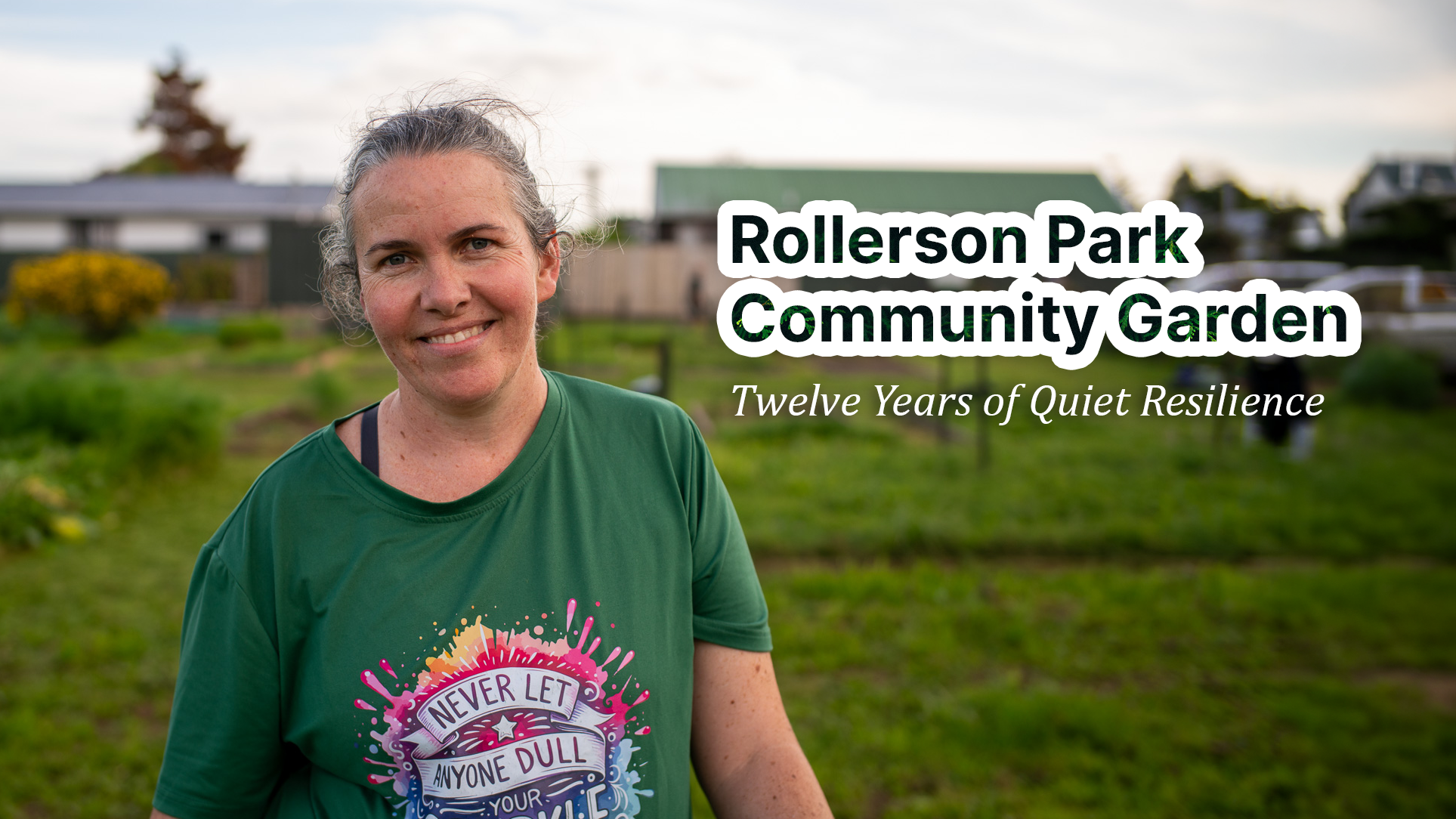
On Sunday afternoons at Rollerson Park in Papakura, you’ll find a small group of people doing something quietly extraordinary: growing food together. There are no forms to fill in, no membership to take out, no expertise required. Show up, pick up a tool, get your hands in the soil, and you’re part of it.
This is Rollerson Park Community Garden — twelve years on from when it began, and still one of the best-kept open secrets in the area. The people behind it are quietly determined to change that.
From barren field to living garden
The garden started in 2014. Back then, the site was an unused patch of grass — one of those hidden reserve areas every community has, the kind that goes quietly forgotten unless somebody decides otherwise. A handful of locals decided otherwise.
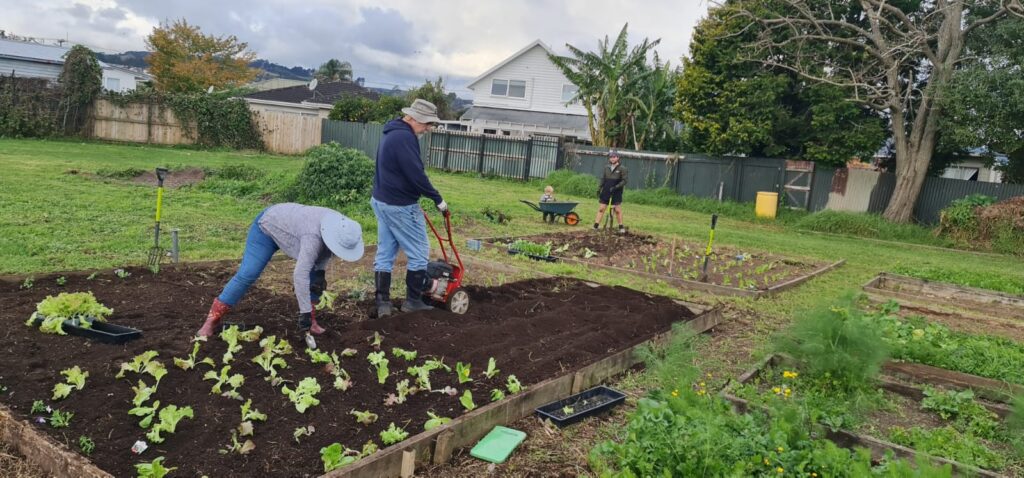
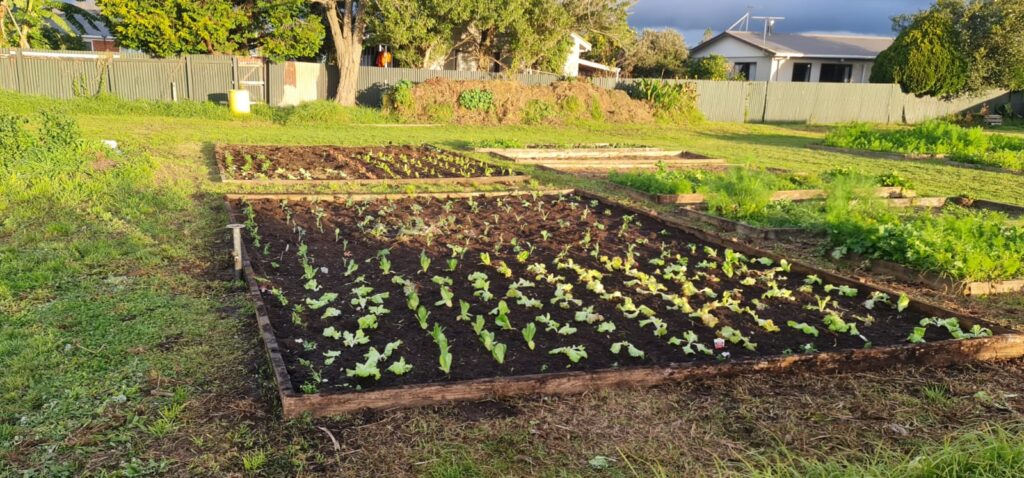
What’s there now is, in the words of Paula Unger, who manages the garden, “a living example of what can be achieved by invested community members collaborating and taking ownership of problematic hidden reserve areas and utilising them for positive activities.” Raised beds of seasonal vegetables. Fruit trees still maturing along the fence. All the gardening tools you’ll need, on hand. Soil that’s been nurtured year after year. A working garden you can walk into and be welcomed.
Sunday afternoons at Rollerson
The model is genuinely simple: come on a Sunday afternoon, help with whatever needs doing, take some produce home. That’s it. No fee. No prerequisite knowledge.
What you’ll find when you arrive is harder to describe than it is to experience. People meeting neighbours they’d never have crossed paths with otherwise. Different cultures sharing growing traditions, swapping recipes, comparing how their families have always used a particular plant. Exercise that doesn’t feel like exercise. Conversations that wander. The plain pleasure of working outside with other people on something useful.
Learning by doing
One of the most exciting things happening at Rollerson is the partnership with Papakura High School’s Horticulture Team. Students come out to the garden as part of their class — and what they find there is often more than the curriculum bargained for.
Students “get outside, discover their own passions and purpose,” Paula says. “They find wonder in the tiniest creatures and are shocked to discover how different vegetables are grown and harvested sustainably.”
For young people who’ve grown up surrounded by instant everything, a garden is a quietly radical place. Food doesn’t arrive in a packet. It takes a season. There are bees, and worms, and water droplets on leaves, and spider webs with their improbable architecture. There are skills — composting, seed-saving, working with soil — that don’t disappear when the wifi goes down. The Papakura High Horticulture Team are breaking barriers to give students life skills outside the classroom, and the garden is where some of that learning lives.
More than vegetables
It would be easy to talk about Rollerson only as a food garden, especially in a winter when grocery prices are doing what they’re doing. And yes — there’s real value in that. Paula notes there’s “definitely more food desperation” in the community lately, and more interest in learning to grow. Growing your own food teaches you to be resourceful with all food. It encourages sharing, swapping, and the kind of practical ingenuity that makes a household more resilient when things get tight.
But that’s only half of it.
The other half is what the garden does for people. “It is a massive help for mental well-being,” Paula says. Slowing down. Breathing fresh air. Soaking up some sunshine. A flower opening. A bee at work. Water on a leaf. Small things that turn out, on closer attention, to be enormous.
And the garden itself is quietly adapting too. Through years of soil care, composting, supporting biodiversity, companion planting, and the occasional “sacrificial” plant strategically positioned, the team have built a system that handles Auckland’s wetter winters and warmer summers without much complaint. The resilience of the place is mirrored in the resilience of its soil.
A treasured Mara Kai
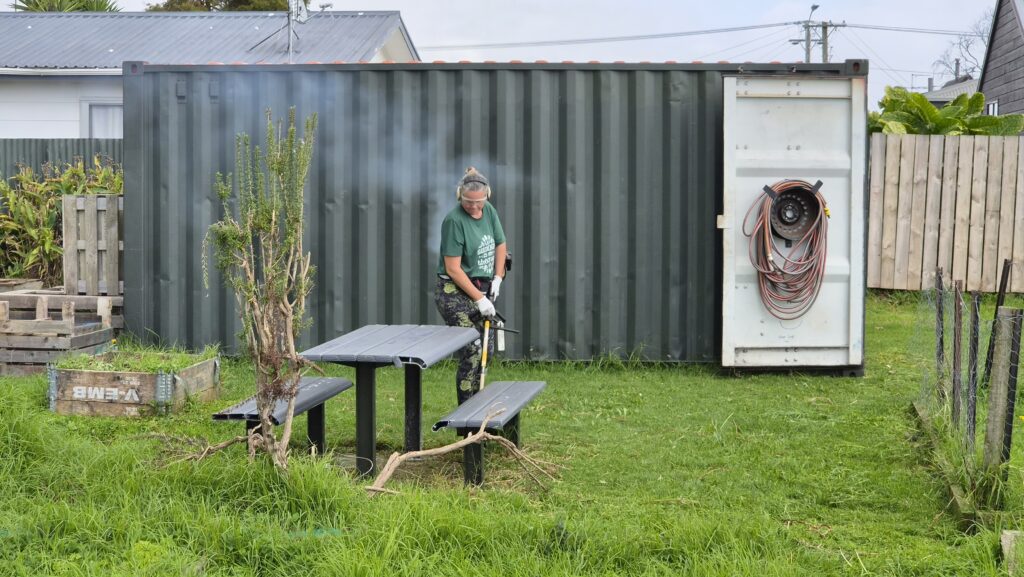
None of this happens by itself. It happens because of people who keep showing up, season after season, through good weather and bad — and through the occasional bit of trouble from the wider community. Paula’s reading of that is worth sitting with: the people who cause trouble in a neighbourhood often need a place like Rollerson the most, to learn what it looks like to live together harmoniously. That’s not a soft observation. That’s the work — and the volunteers who do it deserve every bit of recognition the community can offer.
There are partners worth naming too. Donna Hansen and the Auckland Teaching Gardens Trust have provided practical support and the umbrella organisation that, in the past, allowed the garden to access Auckland Council funding. Jody Deer at Citycare Property has been a steady source of support. Dominic Lee at the Auckland Council Papakura Local Board has backed the garden’s work. The Papakura High Horticulture Team are turning the garden into a classroom. And the volunteers — the people without whose Sunday afternoons none of this would exist — are the heart of it.
Come and see for yourself
If you’ve never been, the invitation is open. Paula puts it better than we can:
Pop in and see for yourself what grows in your soul. It could be gardening knowledge, friends or fitness. You will always gain something — because when you extend your hand to give to others in a community space, you always receive more in return.
Sunday afternoons. Rollerson Park. Bring a hat.
Learn more about Rollerson Park on its yourpapakura.org page
Rollerson Park Community Gardens on Facebook: facebook.com/rollersonparkcommunitygardens
Community directory listing: cab.org.nz/community-directory/KB00036830


0 Comments