When a severe weather event approaches, or an earthquake strikes, or a major infrastructure failure unfolds, you’ll often hear the same phrase in the news: a state of emergency has been declared.
Most people have a general sense that this means something serious is happening. But what does a state of emergency actually do? What changes when one is declared? And why are these declarations so important to community safety?
At CRN, we think understanding this is part of being a prepared, resilient community. So here’s a plain-language guide to one of the most important tools in New Zealand’s emergency management system.
It’s Not Just About the Event — It’s About the Response
A state of emergency is not a panic button. It is a legal and administrative tool that unlocks a specific set of powers and resources that simply aren’t available under normal conditions.
Under New Zealand’s Civil Defence Emergency Management Act 2002, a declaration allows:
- Civil Defence agencies to direct resources rapidly — including personnel, equipment, and supplies — without the usual procurement delays
- Evacuation orders to be enforced, giving authorities the legal power to require people to leave danger zones when lives are at risk
- Access to emergency funding from central government, which is often contingent on a formal declaration being in place
- Inter-agency coordination across police, fire, health, infrastructure, and welfare services under a unified command structure
- Suspension of certain regulatory barriers that can otherwise slow down response — for example, allowing heavy vehicles to travel outside normal weight limits to deliver emergency supplies, or enabling temporary road closures without the usual process
In short, a state of emergency doesn’t cause the response. It enables it. Without a declaration, agencies are limited in what they can legally do, how fast they can act, and what resources they can access.
Who Can Declare One?
Local states of emergency are declared by a mayor or appointed Civil Defence controller in a territorial authority (such as a city or district council). These apply to the area covered by that council.
National states of emergency are declared by the Minister for Emergency Management and apply across the whole country. These are rare — the 2011 Christchurch earthquake, the COVID-19 pandemic in 2020, and Cyclone Gabrielle in 2023 are recent examples.
Both types can be extended in seven-day increments as long as the emergency continues.
Precaution Is Not Panic
One of the most important concepts in emergency management is that good decisions are made before you know the outcome, not after.
Meteorology is probabilistic. A storm forecast to be severe may weaken. A storm forecast as moderate may intensify unexpectedly. The job of emergency managers is to prepare for the plausible worst case, not the optimistic best case. If a declaration is made and the event turns out to be mild, that is not a failure. That is the system working.
Compare it to wearing a seatbelt. If you arrive home safely without needing it, that doesn’t mean wearing it was unnecessary or alarmist. It means conditions were favourable — and you were prepared if they weren’t.
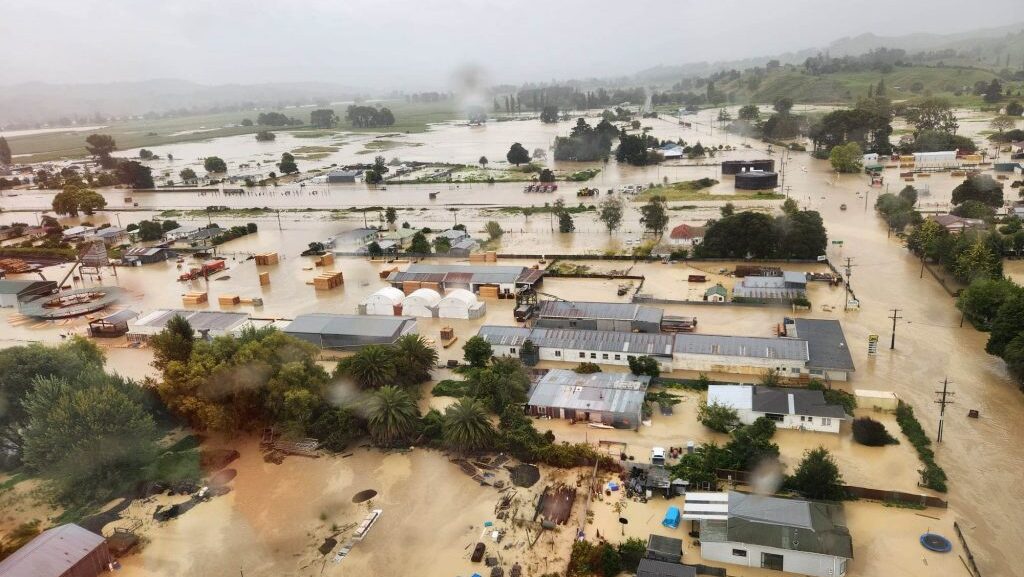
Communities that have experienced major disasters firsthand understand this well. Our own region’s memory of Cyclone Gabrielle in 2023 — and the damage it caused across Hawke’s Bay, Tairāwhiti, and parts of Auckland — is a reminder of what under-preparedness costs.
What Declarations Mean for Communities Like Ours
Here in Papakura, CRN works with marae, faith communities, residents’ associations, and volunteer services to build resilience before, during, and after emergencies. We know from experience that the window for effective community response is short — and that every hour of preparation ahead of an event matters.
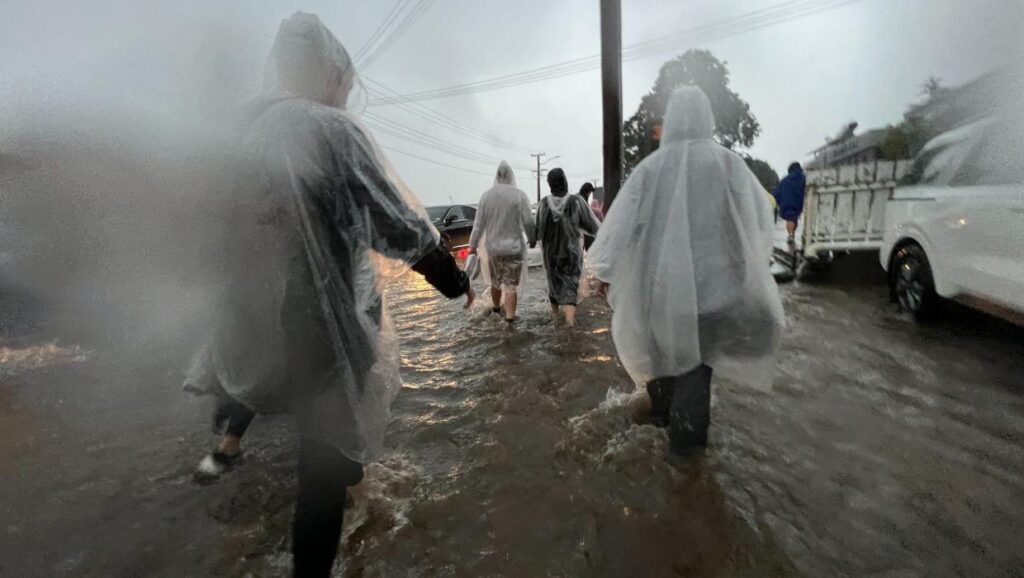
For communities in our area — many of which include residents who are elderly, have mobility challenges, live in low-lying flood-prone areas near the Papakura Stream and Pahurehure Inlet, or have limited access to private transport — early emergency declarations can be the difference between a safe evacuation and a dangerous one.
Declarations also allow welfare services and community organisations to stand up shelters, coordinate volunteers, and reach vulnerable people systematically. Without that framework, the response fragments. Supplies get held up. Coordination falls back on phone trees and goodwill. People get missed.
Where CRN Fits In: Community Emergency Hubs
Formal emergency declarations and the agencies they empower are essential — but they don’t reach into every street, every marae, and every household on their own. That’s where community-led infrastructure matters.
CRN coordinates a network of Community Emergency Hubs across Papakura — based at marae, places of worship, and community centres that already serve as trusted gathering places in their neighbourhoods. They are activated by volunteers, not official services. These hubs are designed to activate during and after an emergency to provide:
- A safe, known place to gather when people are displaced, isolated, or unsure where to go
- Local information sharing — accurate updates from official sources, passed on by people the community already knows
- Welfare checks and coordination for elderly residents, people with disabilities, and households without easy access to transport or communications
- Mutual aid coordination — connecting people who need help with people who can offer it, whether that’s shelter, food, fuel, or a working phone
- A bridge to formal agencies — a recognised local point of contact that emergency managers can work with to understand what’s happening on the ground
Hubs do not replace official emergency services. They complement them. When a state of emergency is declared, formal agencies have legal powers and resources that no community group can match. But those agencies cannot be everywhere at once, and they don’t always have the trust, language, or local knowledge that a marae or a place of worship already has.
That’s the role CRN’s network is built to fill — not as an alternative to formal systems, but as the connective tissue that helps formal systems actually reach the people they’re meant to protect.
How Hubs Activate in an Emergency
In a real event, the hub network operates on a simple principle: local decisions, coordinated communication.
Each hub decides when to open. The people who run a hub know their building, their volunteers, and their community best. When a marae, place of worship, or community centre judges that opening is the right call — based on local conditions, the nature of the event, and the readiness of their team — they activate.
CRN coordinates communication. Once hubs begin opening, CRN shares those openings outward through every channel available to us — our constituent groups and member organisations, social media, and physical signage where conditions allow. The aim is simple: anyone in Papakura who needs to know which hubs are open and where they are should be able to find that information quickly.
CRN also coordinates upward. We work alongside Auckland Emergency Management (AEM), providing regular updates on which hubs are open, what they’re seeing, what they need, and what the situation looks like across our community. That two-way flow helps formal agencies direct their resources where they’re most needed, and helps hubs access the support that only formal agencies can provide.
For households, the best strategy in most emergencies is straightforward:
- Stay at home if it is safe to do so. Most emergencies are best ridden out at home, where you have your supplies, your family, and your familiar surroundings. Hubs are not the first port of call — they are there for when home is no longer an option.
- Know your neighbours. The first response in any emergency is local. The people on your street are the ones who will check on you first, and you on them.
- Know where your nearest hub is. If your home becomes unsafe, or you lose power, water, or contact with the outside world for an extended time, knowing in advance where you can go makes that decision much easier under pressure.
It is also why public trust in emergency declarations matters so much to us. Our hubs depend on the community taking warnings seriously and acting on them. The whole architecture — formal and informal alike — only works when people believe the warnings are real.
What You Can Do
Understanding how the system works is one part of being prepared. The other is knowing what your own community can do before, during, and after an emergency.
A few practical things:
- Know your risks. Are you in a flood-prone area? A coastal inundation zone? Near infrastructure that could fail in a major event?
- Have a household emergency plan. Where will your family meet? How will you contact each other if networks fail?
- Maintain a basic emergency kit — water, food, torch, battery radio, medications, documents.
- Know your neighbours. In any real emergency, neighbours are the first responders. Community connection is the foundation of resilience.
- Follow official channels. NEMA (National Emergency Management Agency), Auckland Emergency Management, and MetService are the authoritative sources during an event.
A Final Note
Emergency management systems exist because communities have learned — often painfully — that the window for effective action closes quickly. The tools that enable formal declarations, evacuations, and coordinated response are there because real people, in real disasters, needed them and didn’t have them.
At CRN, our work is about making sure that when the next event comes — whether it’s a cyclone, an earthquake, a major flood, or something else — our community is ready, connected, and informed.
Understanding what a state of emergency actually is, and what it’s designed to do, is part of that readiness.


0 Comments