
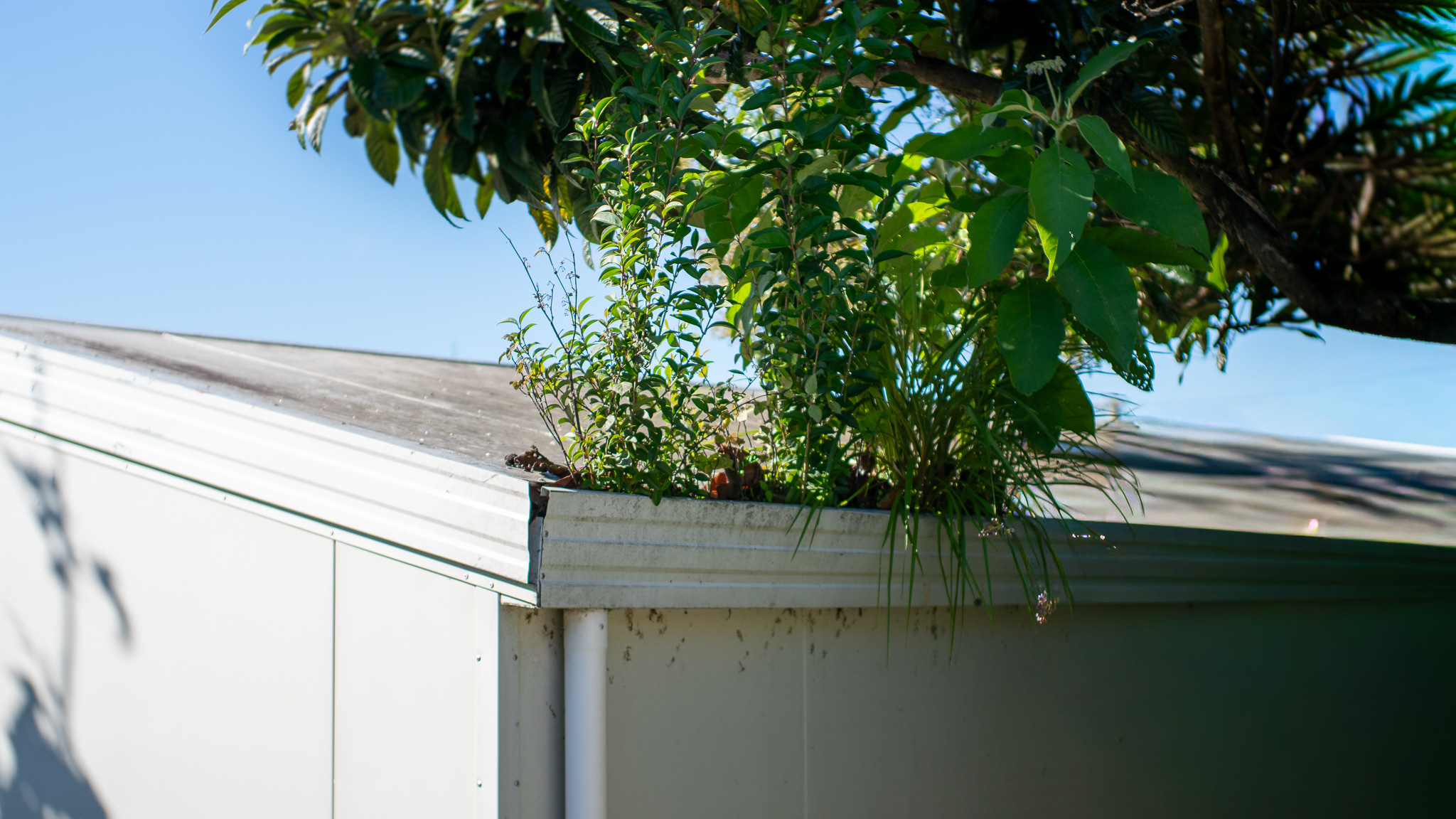
We’ve all walked past that house on the street — the one where the gutters have gone from “could use a clean” to a “small rainforest growing out of them.” It happens gradually. Life gets busy, the gutters get forgotten, and before you know it, nature has moved in and set up camp. We get it. There’s always something more urgent on the list.
But gutters are just the start. When the next big downpour hits, it’s not only blocked drains that cause problems — it’s solid fences that trap water, sheds built in the wrong spot, paved-over gardens with nowhere for rain to soak in, and all the small decisions we make about our properties without thinking about where the water will go.
Here in Papakura, we know a thing or two about what heavy rain can do. And a lot of the damage starts at home.
Your property, your responsibility
Auckland Council’s Healthy Waters team manages the public stormwater network, but property owners are responsible for maintaining their own stormwater pipes, drains, and gutters. When private systems fail, the water doesn’t politely stay on your property. It flows downhill, across fences, into neighbours’ garages, and into the public system — which is already working hard to cope.
But it goes well beyond drains. The Healthy Waters team puts it simply: your job is to help water get from one side of your property to the other without causing damage. That means looking at your section with fresh eyes — where are the high points, where are the low points, and what’s sitting in the way?
Solid fences are one of the biggest culprits. A solid fence across a slope acts like a dam, impounding water until it either floods back through your home or the fence fails catastrophically — sending a wave of water and debris onto the property below. Auckland Council recommends permeable fencing, or simply ensuring there’s a gap at the bottom to let water through. Worried about keeping the dog in? Chicken wire along the base does the job without blocking the flow.
The same logic applies to anything sitting in an overland flow path — the natural route water takes across land during heavy rain. Raised garden beds, large pot plants, sheds, and decks placed in the wrong spot can all obstruct water flow. Even where you store your bins or outdoor furniture can make a difference during a serious storm.
And think about what’s on the ground. Every square metre of lawn or garden is doing important work, soaking up rainwater and slowing runoff. Before you concrete over another patch of grass for a parking pad, think about where that water will go instead. Gravel, grass, or permeable paving all allow rain to drain rather than run.
Of course, drains still matter. Clean your gutters regularly. Check that downspouts run clear. Keep yard drains free of leaves and debris. But these are the basics — not the whole picture.

A note for renters — and their landlords
A large proportion of homes in Papakura are rentals, and that creates a grey zone. Renters look at a damaged gutter or a sagging fence and think, “That’s the landlord’s problem.” Landlords assume the tenant is keeping things tidy. Meanwhile, nobody does anything, and the next downpour sends water into the house — or the neighbour’s house.
Under the Residential Tenancies Act, landlords are responsible for keeping rental properties in a reasonable state of repair, and that includes guttering, downspouts, drainage, and fencing. If your rental has obvious maintenance issues that could worsen flooding, raise it with your landlord or property manager — in writing, sooner rather than later.
But renters aren’t off the hook. Keeping yard drains clear, not dumping garden waste where it blocks water flow, making sure bins and furniture aren’t sitting in a flow path, and reporting problems early — that’s on you. When the rain comes, everyone in the house gets wet regardless of whose name is on the title.
Landlords, a few hundred dollars a year on gutter cleaning, drain checks, and fence maintenance is far cheaper than a flood damage insurance claim or the cost of rehousing a tenant.
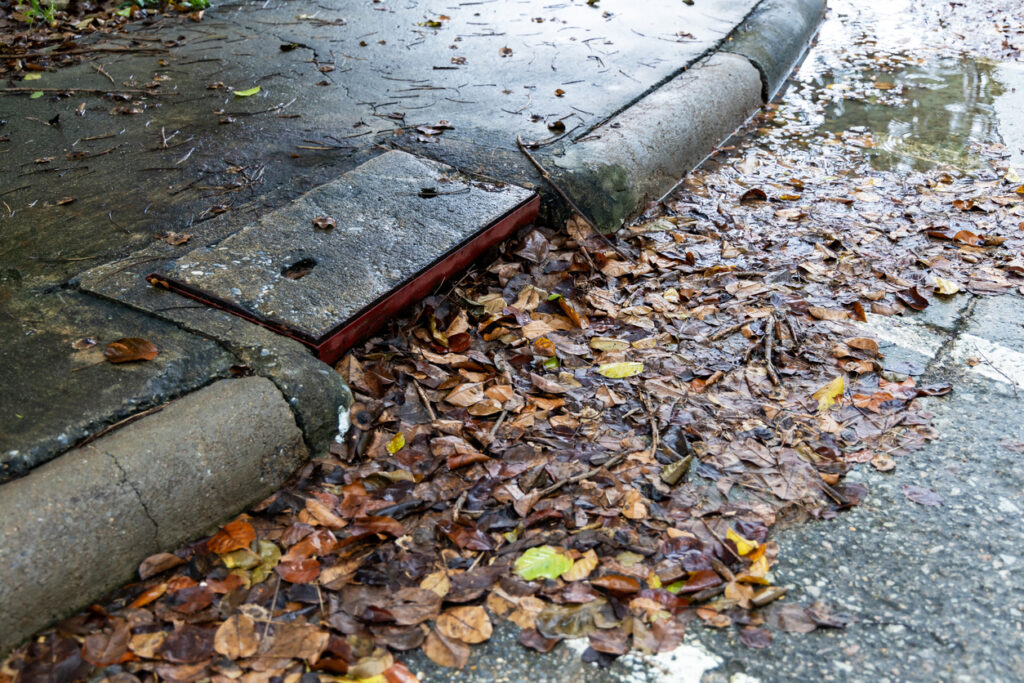
Know your risk — and be a good neighbour
Check Auckland Council’s Flood Viewer to see if your property sits in a flood plain or on an overland flow path — it’s free, takes two minutes, and the link is on our website. And if you spot blockages on public land, report them to Auckland Council on 09 301 0101.
Stormwater doesn’t respect property boundaries. What happens upstream affects what happens downstream. Keeping your property well maintained isn’t just about protecting your own home — it’s about making the whole street more resilient.
At the Community Resilience Network, preparing for emergencies sometimes means big conversations about climate adaptation and infrastructure. But sometimes it starts with a gutter, a fence, or a garden bed — and the question we should all be asking: where does the water go?
For more on flood preparedness, visit Auckland Emergency Management or check your property’s flood risk on Auckland Council’s Flood Viewer. Auckland Council’s guide Creating a Flood Resilient Home has practical tips for homeowners. To report a blocked drain on public land, call Auckland Council on 09 301 0101.


0 Comments