
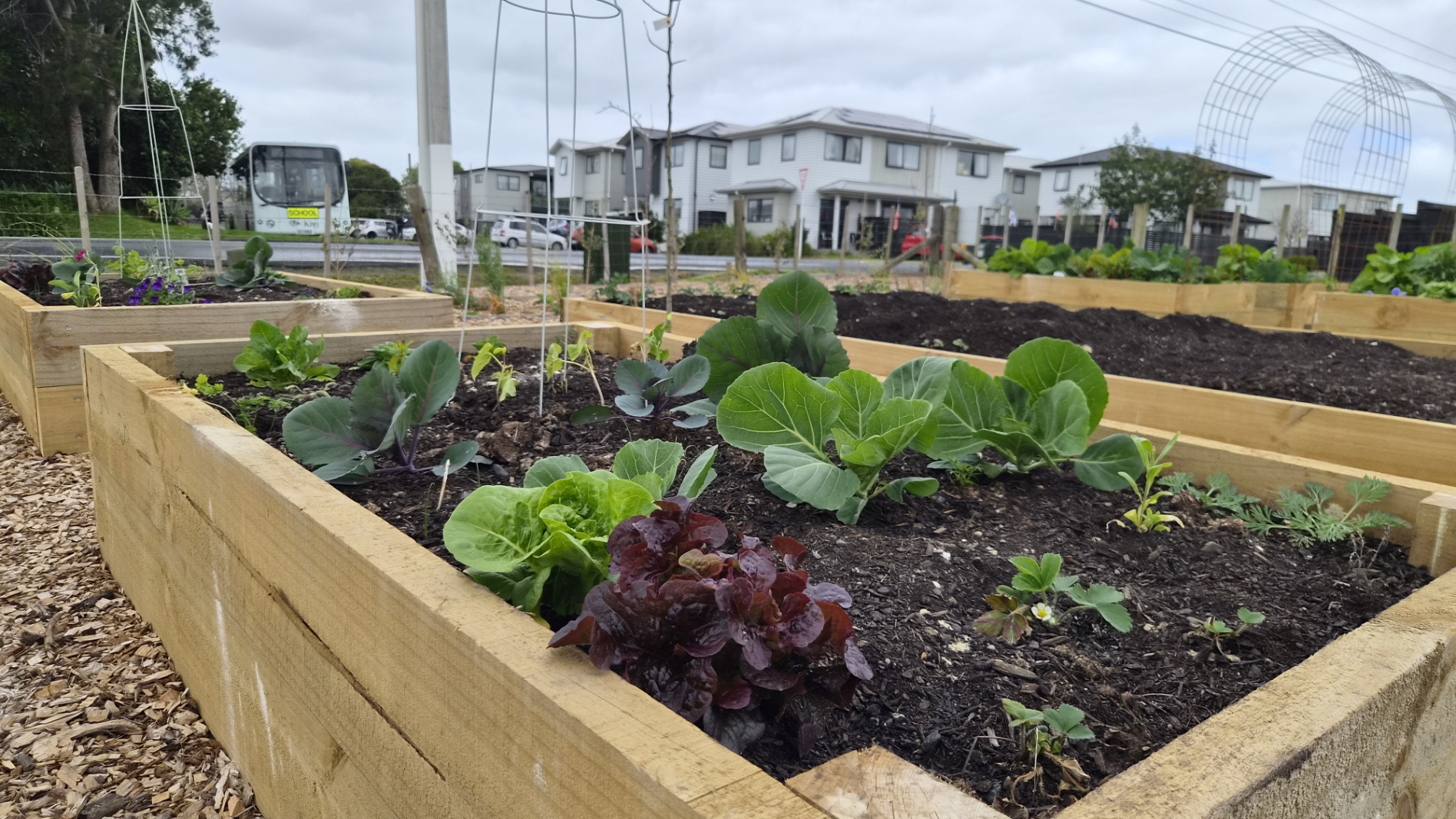
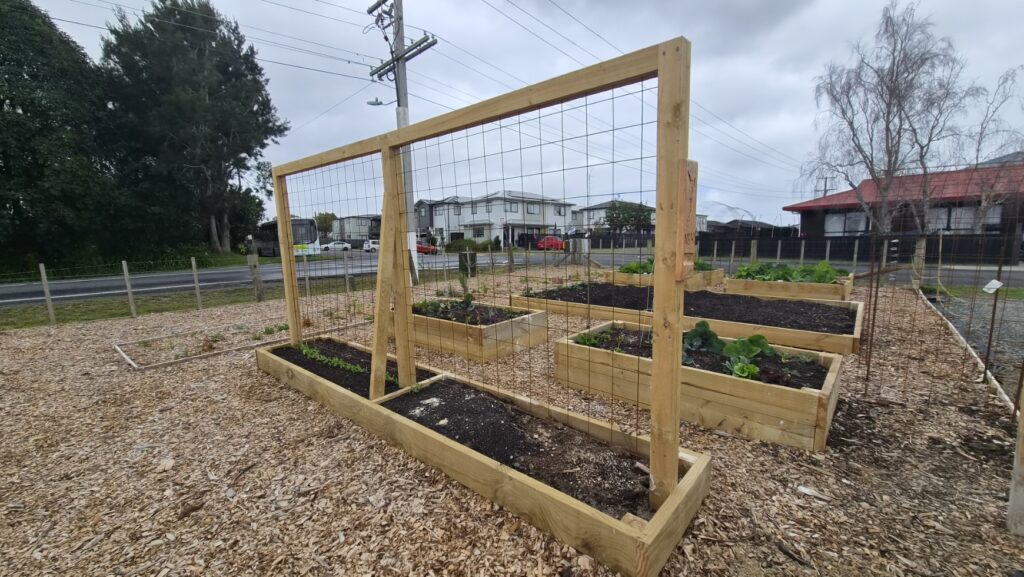
Drury is changing faster than almost anywhere in Auckland. New homes, new roads, a new rail station, and thousands of new neighbours arriving in a place that was a village not long ago. Amid all of that, something much smaller opened on Saturday 12 September: the Murray Street Community Garden.
It has been about two years in the making. Ron Bagrie got the idea moving and pulled together a committee of five to make it happen. He is quick to point out who did the heavy lifting.
“One of the committee is Trish Nixon, who is the manager, and has done most of the work.”
Asked what the hardest part was, his answer was short: finding the right manager. Everything else followed from that.
A church, a paddock, and a lot of goodwill
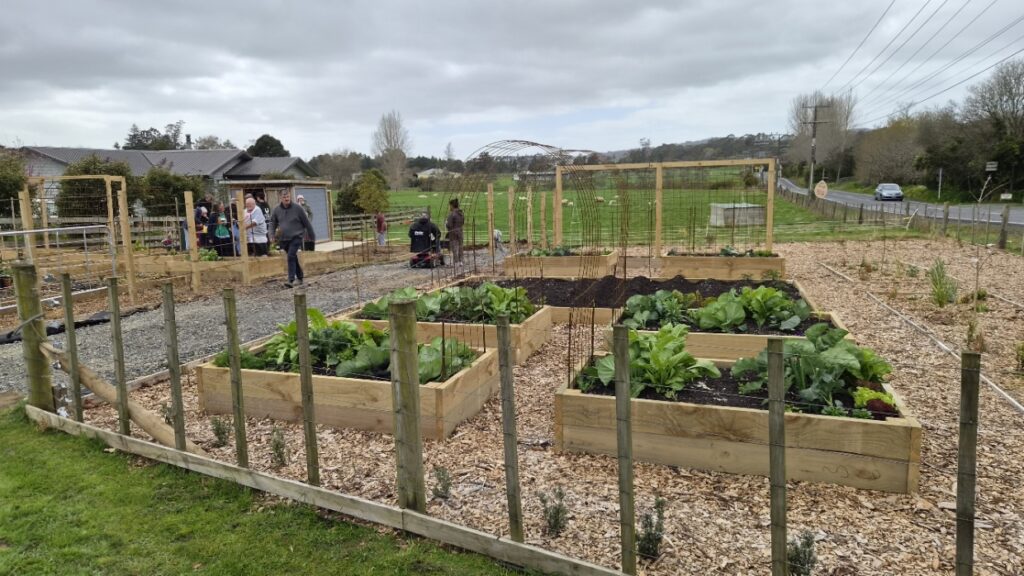
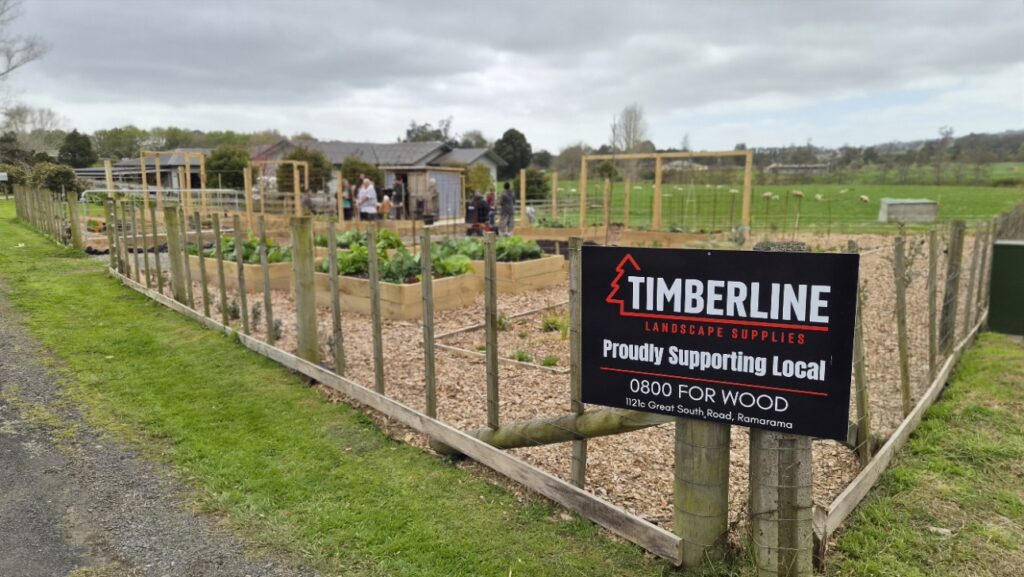
The land came from the Drury Church, which made the site available for community use and has signalled that the garden could double in size if interest keeps building. The church also put in most of the money. Local businesses filled the gaps, donating materials or selling them at cost. Timberline Landscape Supplies of Ramarama is one of them, and its sign now sits on the garden fence.
The work itself has been shared around. Children from Drury Christian School have pitched in during their life skills afternoons. The Drury Community Committee also got behind the idea early, helping secure some initial seed funding through Council’s Papakura Climate Ready project to help get the garden underway. Neighbours from York Street and Murray Street have been out working the land, and several have already claimed beds of their own.
Opening day
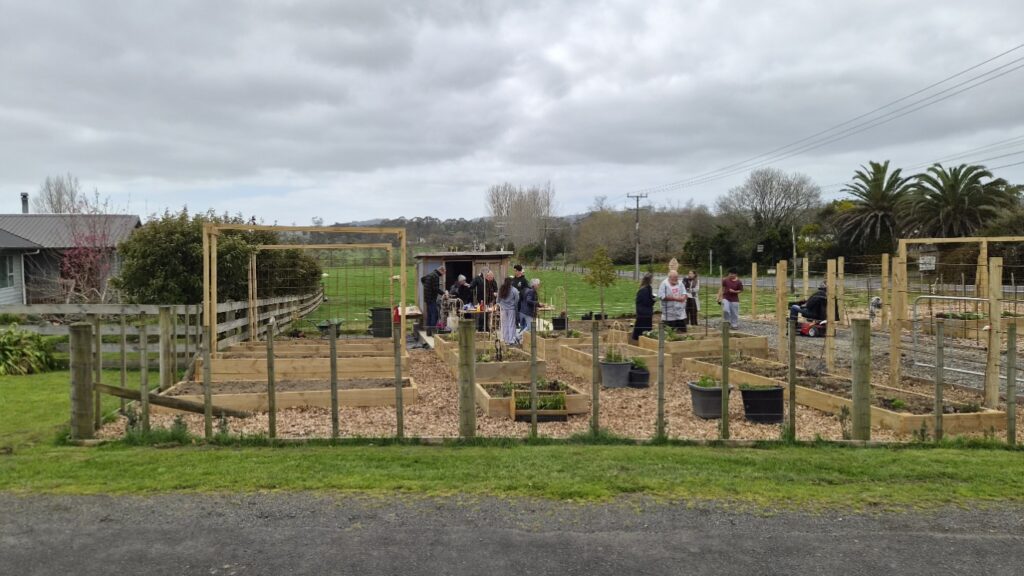
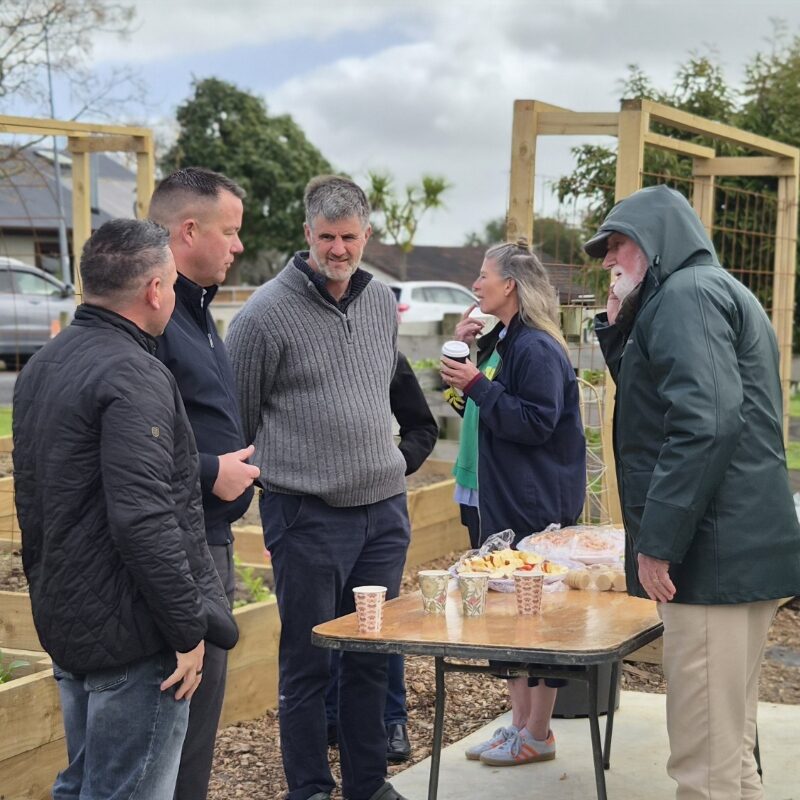
The opening drew a steady stream of visitors, about as many as the team could happily talk with, although Ron reckons a cold wind kept a few people at home.
Among those who came along were Papakura Local Board chair Kelvin Hieatt and ward councillors Daniel Newman and Matt Winiata. That turnout was no accident.
That point is worth sitting with. A garden the neighbourhood feels ownership of is a garden that gets looked after. The security comes from the people, not the fence.
“A good showing of councillors surprised us, which was part of our plan, to spread the idea of community gardens looked after by locals. This is the easiest way to keep them from being damaged. The councillors can help spread the word, along with the CRN.”
How the garden works
There is a mix of shared beds and individual beds, so you can join in without committing to a plot of your own. All sorts of plants are already in the ground, with Trish doing the planning.
The gate is open from 7am to 7pm Monday to Saturday. On Sundays it opens from 1pm to 7pm, and only for watering. As Ron puts it, even plants need a day of rest.
There will also be working bees and teaching times, so people who have never grown anything can learn alongside those who have.
It costs nothing to take part. Donations are welcome and go towards the practical things: wheelbarrows, garden hose, seedlings, and whatever else the garden needs next.
The garden is aimed squarely at the streets around it, from Murray, York and Sutton Road down to the rail line, although anyone curious is welcome to come and have a look.
Why it matters
Ron’s case for community gardens is not complicated.
“Community gardens keep people down to earth and help to destress people in the midst of all the busyness. Food is also an undisputable blessing as times get harder for the average family.”
From a resilience point of view, the food is only half of it. The other half is the neighbours. Drury is absorbing an enormous number of new residents, and connection between people does not happen automatically in a suburb that is still being built. A garden gives people a reason to turn up, a reason to talk, and a shared thing to care about. When a storm hits, or a road floods, or the power goes out, those are the relationships that carry a street through.
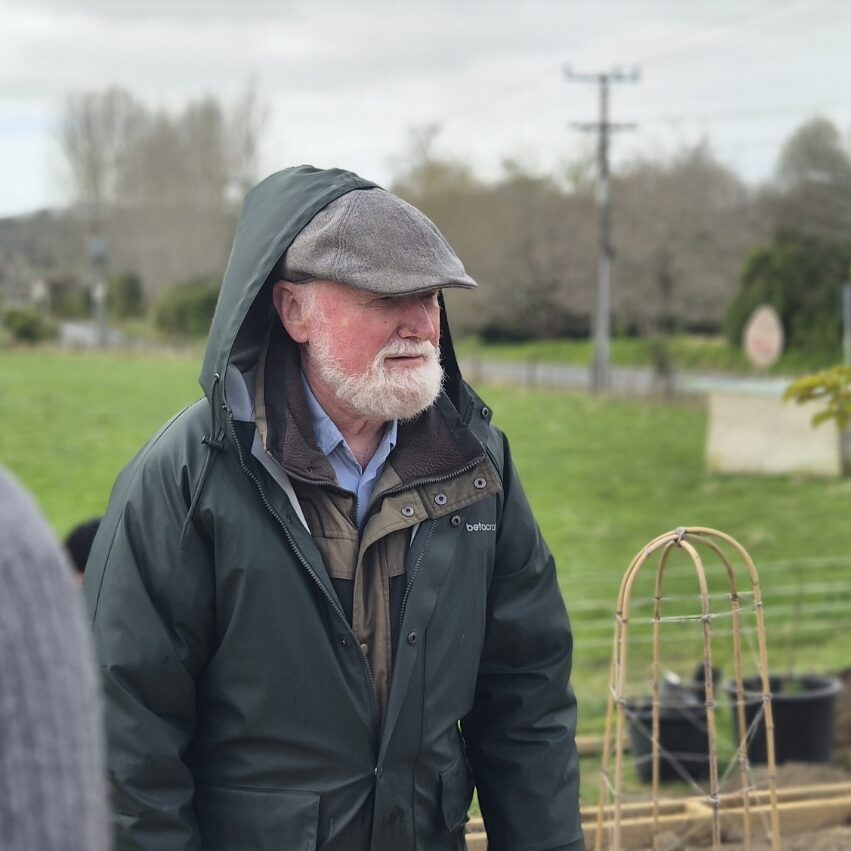
“Community gardens keep people down to earth and help to destress people in the midst of all the busyness. Food is also an undisputable blessing as times get harder for the average family.”
What’s next
Ron hopes the garden will be twice its current size in a year, and that the group will be in a position to help other communities start gardens of their own.
If you would like to get involved, whether that is claiming a bed, joining a working bee, or just having a look around, ring Trish on 022 543 1368.


I would love tobe involved and help at your garden but i do live in Pukekohe North.i do have family living in Drury
Wow so neat to see more kai gardens come over to waiuku maara kai community garden.
Grace