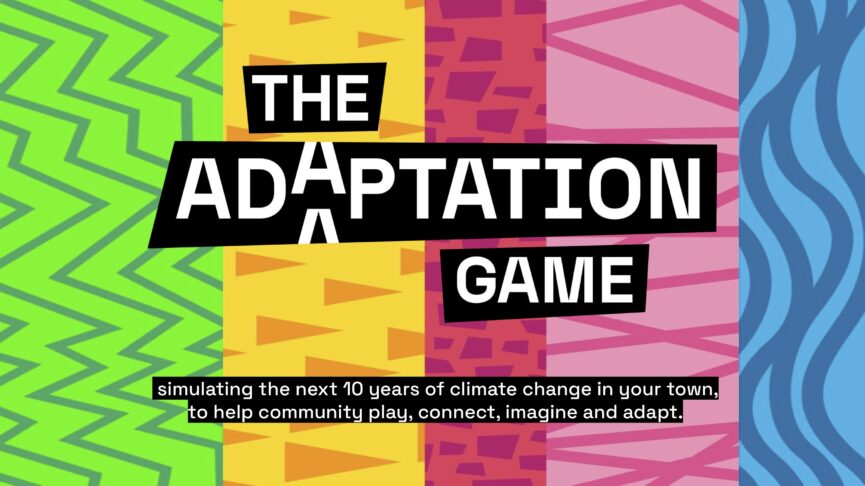
Not too many board games can save your life, but TAG just might.
The Adaptation Game – TAG – hails from across the Tasman, where it was developed in Victoria after devastating bushfires, yet another risk magnified by climate change.
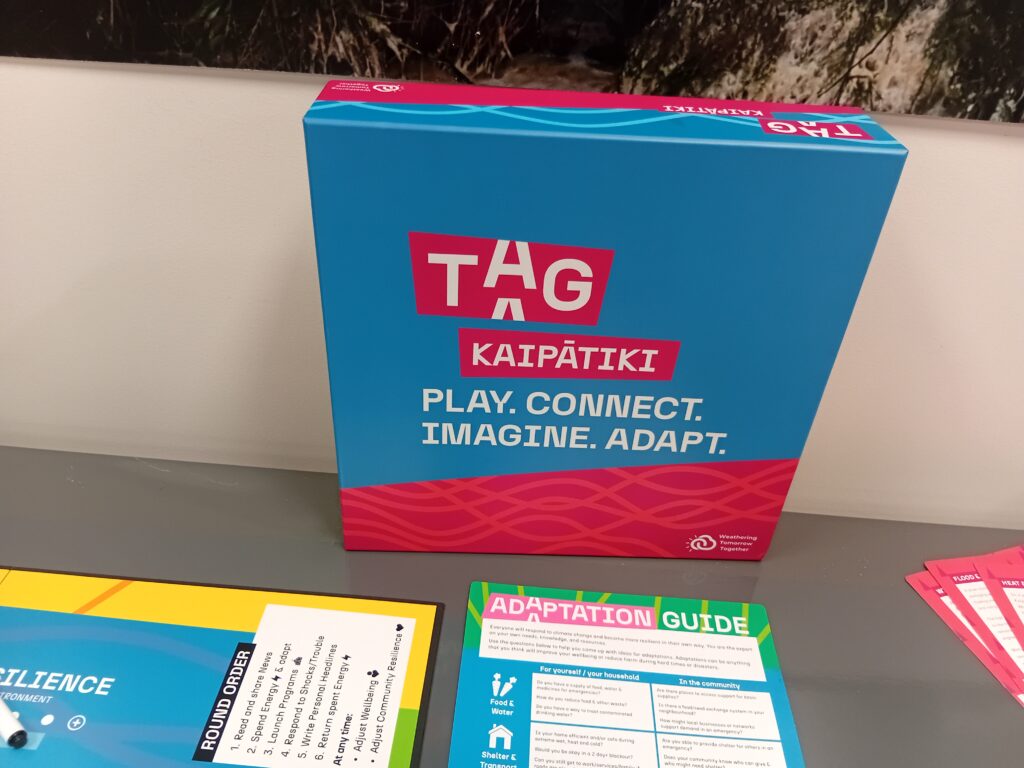
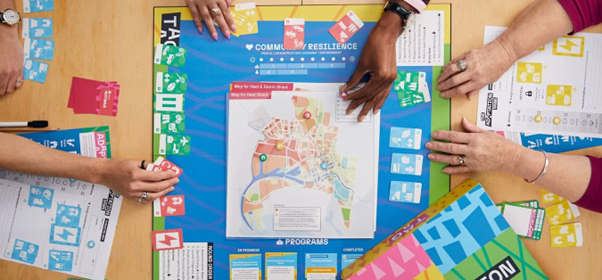
Now Cole Armstrong and Baruk Jacob are working to apply the game to Auckland communities, and they are off to a flying start, having adapted it to the area they both live in, the Kaipātiki Local Board area on the North Shore.
They are keen to create a Papakura specific version of the game, which is designed to create conversations among players as various scenarios requiring different responses are offered up.
Each version of the game sets up a map of an area, with overlays that display various climate-related scenarios that may impact communities, in the Kaipātiki case, flood, heat shock and wildfire – all regarded as likely to increase in the future.
Players find their own homes on the map and are provided with information relevant to the various disasters that might strike, be it flooding, smoke from fires, blocked roads in a heatwave, or a secondary problem that might arise because of the initial crisis.
“These are real scenarios,” Armstrong says. “They are specific to each area because not all areas face the same risks. Papakura is a known flood-zone, but the most recent problems have stemmed from big industrial fires that caused problems for homes in the immediate area, with toxins released and heavy smoke covering a lot of residential properties.”
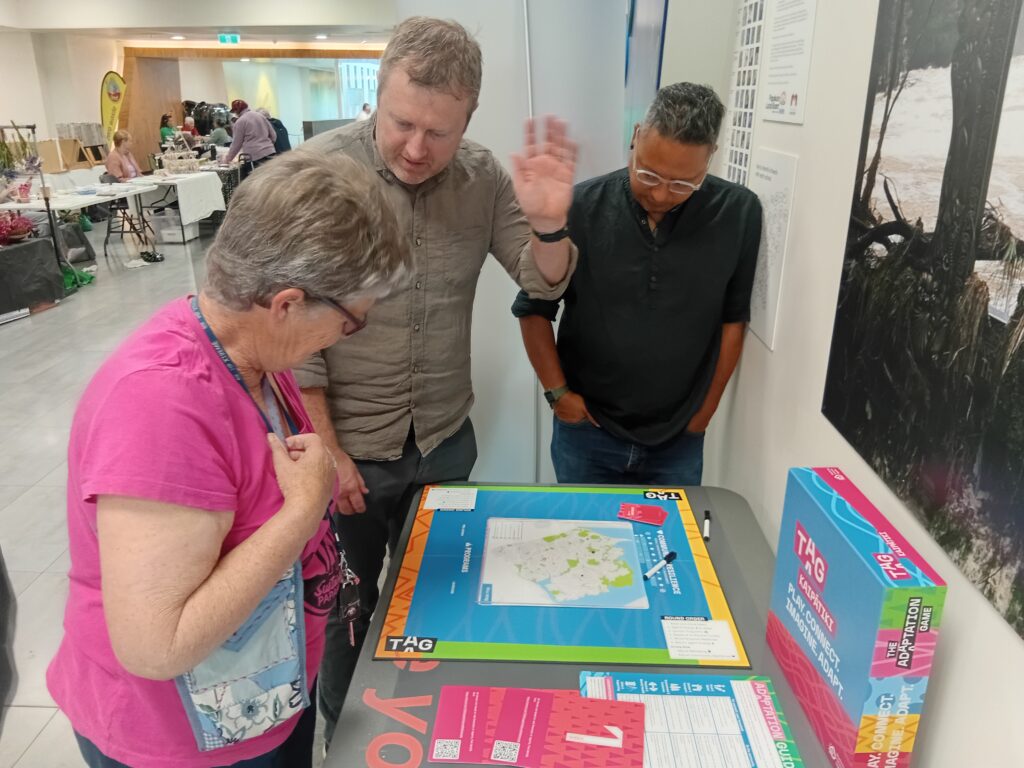
“By playing the game, locals can add valuable knowledge that’s based on their own experiences. Everyone can tell you they remember something, and by bringing it all together, better planning can be put in place, not only by councils and emergency authorities, but by residents themselves.”
Jacob says the voice of the community is essential. “No one really knows a community as well as those who live in it, but their voices are sometimes lost in planning. And we tend to think of emergency and resilience planning being something someone else does for us, rather than something we can do for ourselves.
“The most likely person to help in an emergency is you – and your neighbours.”
The pair have taken TAG to some unlikely places. “We’ve played at a men’s shed, we’ve played at a retirement village, and we’ve played at schools,” Armstrong says. “Community doesn’t have to be geographic. Many of us belong to sports groups, churches, book clubs and the like, and they are all communities too. TAG is ultimately just a way of getting people talking and empowering them to be able to do the right thing.”
The Kaipātiki version used at a pop-up session outside the Edmund Hillary Library is part of Auckland Council’s efforts to raise awareness around the challenges climate change will bring to the region over time.
A player is stuck in a car on a blocked arterial road in a heatwave. They’re going nowhere, and with a child in the car becoming increasingly distressed, they are asked to respond.
“Planners think we are likely to get more instances like that in our area,” Jacob says. “Papakura has more infill housing, more concrete, more tarseal, and these are things that raise the temperature, making our environment hotter.”
Both men agree that TAG’s advantage is that it creates conversations at an individual level. Players almost always relate their own experiences when faced with a crisis, and outline how they responded to them.
“The past tends to be a great indicator of what will happen in the future, but it is also quickly forgotten,” Jacob says.
“TAG allows people to progress from what they might do, to what response may be better for them, their families, their neighbourhoods and their wider communities.”
You can see TAG being played in a video here https://youtu.be/bAsIW5vKe_c
Moving people from saying to doing
We’ve all done it, in fact almost all of us do it every year in December when we make a resolution to change something in our lives, be it stopping smoking, exercising more, or sharing more of the household chores.
Then we don’t turn our good intentions into deeds.
“We want to do things,” Armstrong says, but the world gets in the way. “I don’t know how often I’ve said I’ll eat less cake and fewer biscuits. The spirit is willing, but the flesh is weak.”
As a behaviour change specialist, he applies psychology and his experience in behavioural economics to help organisations reach their goals, in this case Auckland Council’s desire to inform and upskill communities about climate change and its likely impacts.
“We look at why people don’t act, and having the initial conversation is a vital part of that jigsaw,” he says.
“You often hear that giving people the knowledge is half the battle – it’s not. You have to find a way to move people from knowing there’s a problem, to doing something about it.”
Jacobs is an experience designer, an experienced experience designer in fact. He’s expert in using innovation research, a practice that helps teams expand their critical thinking and responses to emerging challenges, such as climate change.
“It’s about finding the barriers, the things we, our lives and others, put in the way that stop us from fulfilling our good intentions. If you can do that, and understand what’s stopping you, you can put solutions in place and create a different outcome.”
TAG allows the Weathering Tomorrow team, an initiative supported by council’s Climate Resilience Programme to find out how communities would respond to more
extreme weather events
“It gives us a good picture of how different sections of the community are likely to respond to extreme weather events, what resources they will need to call on, the networks they will turn to, and what community resources they would expect to be available,” Armstrong says.


0 Comments