Helping people turn their houses into ‘healthy homes’ is all in a day’s work for Kootuitui ki Papakura.
Headed by Warm Dry Homes team leader Whiti Herewini, a Kootuitui team visits people and provides advice around insulation, ventilation, curtains and more, to help raise awareness on how to be warm and healthy in winter.
After years of providing the service, Whiti and her team are well-used to transforming homes into healthier spaces for whaanau, but after witnessing significant flooding in the area, they realised they had to do more to educate people on the risks of increasingly disruptive weather events.
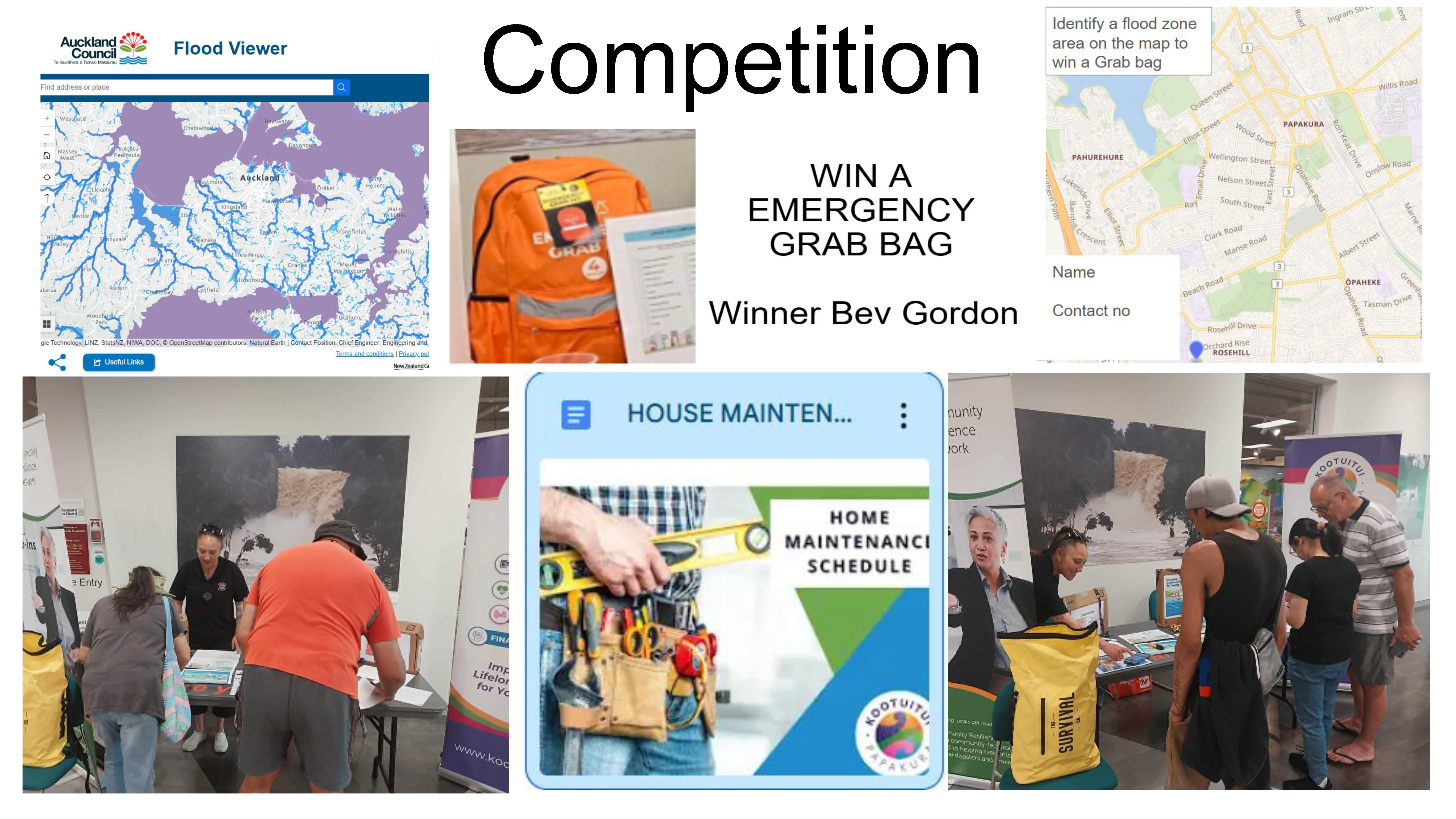
Auckland Council has stepped up by providing seed-funding for the latest initiative, advising families on how to be flood resilient around their sections, with great information captured in a Home Maintenance Schedule to make it easy for people to identify and stay on top of potential problems, that left unchecked could have terrible consequences in an emergency.
Whaea Jan Piahana says the team realised that with weather patterns continuing to be influenced by climate change, and flooding occurring more often and severely than in the past, they had to come up with a way to ensure the benefits of their warm, dry, healthy homes programme weren’t going to count for nothing, like being washed away in a flood.
“There’s no point in putting in flash curtains and insulation and making a house healthy if it’s all at risk in the event of an emergency. We came up with a simple checklist that people can keep, serving as a reminder to look at and fix the things we can all overlook.
“The very first item on the checklist is to run an eye every six months over the roof, checking for loose nails, broken tiles, misplaced flashings and the like, and to extend that check to gutters and downpipes.
Warm Dry Homes team leader, Whiti Herewini
“The very first item on the checklist is to run an eye every six months over the roof, checking for loose nails, broken tiles, misplaced flashings and the like, and to extend that check to gutters and downpipes.
“We have an amazing local plumber helping us out. He’s very community-minded and doesn’t mind sorting out problems and it’s well worthwhile because one home he checked we discovered the downpipes weren’t connected to the stormwater, just discharging onto the ground, and that’s something that could be a disaster in a crisis.
“It’s certainly something you don’t want to discover when the rain is already teeming down and the water outside is rising.”
Also on the checklist are regular inspections of cladding, brickwork, timber paint, rotten boards and vents.
“It’s the old story,” Whiti says. “You spend a little bit of time to check things, and it saves a lot of grief down the road.”
“Anyone is welcome to pop by and pick up a schedule. We ran a course to teach people about the things they need to check, and it was well-received. Now we’re looking for funding to keep it going to help more families, and for people who can offer handyman skills to help with the little jobs that are uncovered.
“A lot of the time people don’t have the knowledge, skills or disposable income to stay on top of everything, so our schedule just gives them the confidence to check a few things and the knowledge to know enough to be able to say, ‘that doesn’t look right’, or ‘I better do something about that’.”
Would your home pass a health test?
The World Health Organisation Healthy Housing Guideline recommends a minimum indoor temperature of 18°C, and ideally 21°C if babies or older adults live in the house.
The average daily indoor temperature in the winter for most New Zealand houses is just 16°C. If house temperatures fall below that, the risk of respiratory illness increases, because cold houses are also usually damp.
Living in a cold environment is also stressful for people who are elderly, sick or very young, and there is growing evidence that it has mental health impacts.
Kootuituiworks hard in the community delivering a warm, dry, healthy homes programme because New Zealand fares poorly when it comes to child health. The well-being of our children is rated only 34th out of 41 developed countries in testing in 2017.
Papakura East is in the highest 1% of census areas for childhood hospitalisations, potentially attributable to poor housing conditions.
Because of that, Kootuitui focuses on providing services that promote sustainable intervention, that serve to futureproof the community, by providing services such as its warm, dry, healthy homes initiative.
“It’s a pretty simple one,” Jan says. “We believe every family deserves to live in a warm, dry, healthy home, and that children should be protected from contracting preventable diseases caused by cold, damp, mouldy and inadequate housing.”
Building resilience in the community
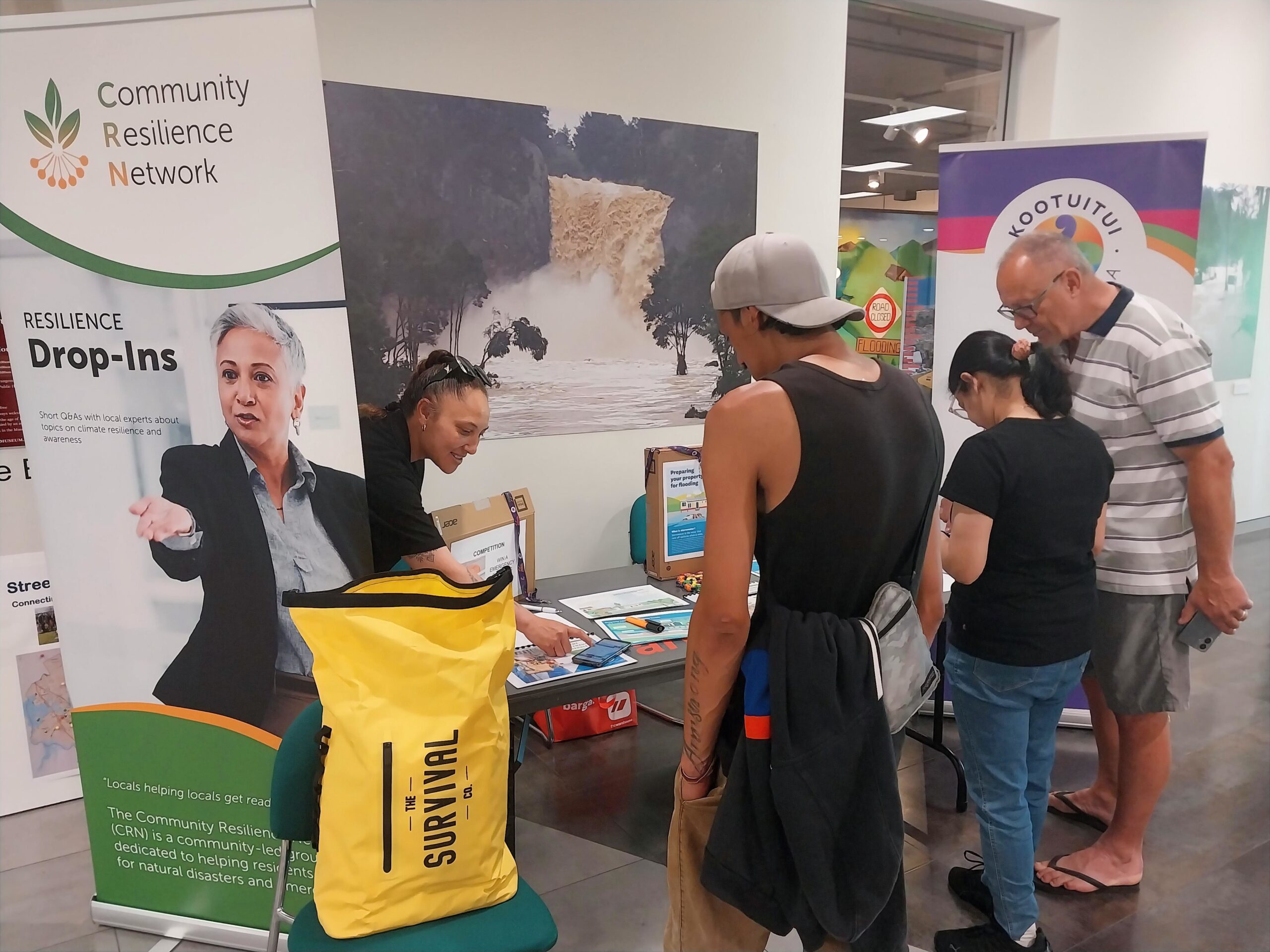
In the wake of Cyclone Gabrielle in 2023, an emergency readiness and response plan was prepared by Papakura Local Board in collaboration with the local community, and a number of community climate-ready projects have been initiated. The Papakura Community Resilience Network, made up of groups across the area, is leading efforts to promote planning and action to help people prepare for disaster and become more resilient to future shocks.
As part of that work, groups are holding pop-up information sessions outside the Papakura Museum each weekend during the run-up to Christmas.
Whiti and Jan say the informal sessions are a way for people to connect, find out more, visit the museum’s flood exhibition, and to understand that disaster resilience starts in your own home.
“The big plus with community groups doing the sessions is that the ones passing on the information are people you know. It’s just having a chat,” Jan says.
“We all know another flood is coming, but none of us knows when.”
Papakura Museum hosts its Living With Floods exhibition until March next year. It’s at 209 Great South Road, opposite the Sir Edmund Hillary Library.


0 Comments